Prompt injection in a development agent: the VS Code attack chain as a system problem
A safe reconstruction of the path documented by GitHub Security Lab and the technical controls required for agentic development environments.
Key finding
The weakness does not reside in a single prompt. It emerges when untrusted content, powerful tools, local secrets and outbound communication are connected without end-to-end trust boundaries.
Why this case matters
Conventional input validation assumes that data and instructions are processed separately. In a language model, both appear in the same context. Text from an issue, document or tool result can contain useful information while also attempting to change the agent’s behaviour.
The VS Code case published by GitHub Security Lab is therefore more than a product vulnerability. It illustrates a general agentic risk: a system consumes external content, treats it as action-relevant context and can then execute tools with local permissions.
This study deliberately omits operational detail. The exact payload is not relevant to an architecture decision. The sequence of trust transitions is.
The documented attack chain
The report begins with manipulated content in a publicly accessible GitHub issue. A user asks the agent to inspect the issue through a connected GitHub MCP server. That tool call is plausible and expected.
The tool result then enters the model context as text. An embedded instruction can compete with the user’s actual intention. In the documented scenario, it attempts to cause access to local information followed by an outbound network action.
The chain has five stages:
- Untrusted content: an external source contains attacker-controlled text.
- Trust elevation: the tool result becomes working context for the model.
- Tool selection: the agent translates text into a local action.
- Data access: the action reaches information not required for the original task.
- Outbound channel: a network capability can transfer data to a new destination.
No single stage must be defective in isolation. Reading an issue, opening a file and fetching a URL are normal development activities. Their composition creates the risk.
Four unsafe assumptions
Tool output is trustworthy
A trusted MCP server can return untrusted data. The identity of the tool says nothing about the integrity of the issue or document it reads. Provenance therefore has to remain attached to the individual result.
A confirmation solves the problem
Confirmations matter, but frequent prompts become routine. A message such as “allow file read?” does not explain sensitivity or data flow. A useful decision gate identifies the source, destination, affected resource and reason for the action.
The workspace is a sufficient boundary
Development machines often hold environment variables, CLI sessions, SSH configuration and extension credentials. Most tasks require only a small subset. Without an isolated runtime, the entire workstation becomes part of the potential impact area.
A system prompt can neutralize external instructions
Prompt rules are behavioural controls, not reliable security boundaries. Attackers can vary wording, nesting and context. Permissions, paths and network access must be enforced outside the model.
The required control system
GitHub and current VS Code documentation describe measures including confirmation for new URLs, protection for sensitive configuration, tool selection, policies, Workspace Trust and containerization. Their value comes from combination.
Input and provenance
Content from issues, websites, documents and tool responses should remain labelled as untrusted. The agent needs to distinguish user intent, local policy and external data. Where possible, tools should return structured data rather than a free-form block that resembles instructions.
Least-privilege tools
An analysis request does not automatically need write access, shell execution, secret stores and unrestricted networking. Capabilities should be granted per role or task. Parameter constraints matter as much as the tool list: a file reader can be limited to the repository and an HTTP client to approved domains.
Sensitive data outside reach
Ephemeral tokens, separate identities and project-specific secret injection reduce potential impact. Credentials the agent does not require should not enter its process environment. Logs must not contain complete secret values.
Controlled egress
Agents rarely need unrestricted internet access. Domain allowlists, proxy logging and blocking unknown destinations interrupt the final stage of many exfiltration chains. Approval for a new domain should expose the relevant data context.
Isolated execution
Containers or ephemeral virtual workspaces limit file access, processes and persistence. The host remains outside direct reach. Isolation must be technically enforced rather than implied by a workspace convention.
Reviewing a real environment
A security review for development agents should not focus only on adversarial prompt examples. A data-flow analysis is more useful: Which external content enters context? Which tools can it trigger? What data is reachable? Which outbound channels exist? Where is a person required to decide, and what information do they receive?
Controlled misuse paths can then be exercised without real secrets. Each control should be tested technically: Is access actually denied? Does execution remain in the isolated environment? Is an actionable audit record created?
Conclusion
Prompt injection in agentic software development is not solely a model problem. It is a system problem at the boundaries between data, model, tools and infrastructure. The solution must therefore be systemic. Prompt hardening alone leaves the decisive permissions intact. Provenance, least privilege, data controls, egress restrictions and isolation together reduce both the probability and impact of successful manipulation.
Original diagrams
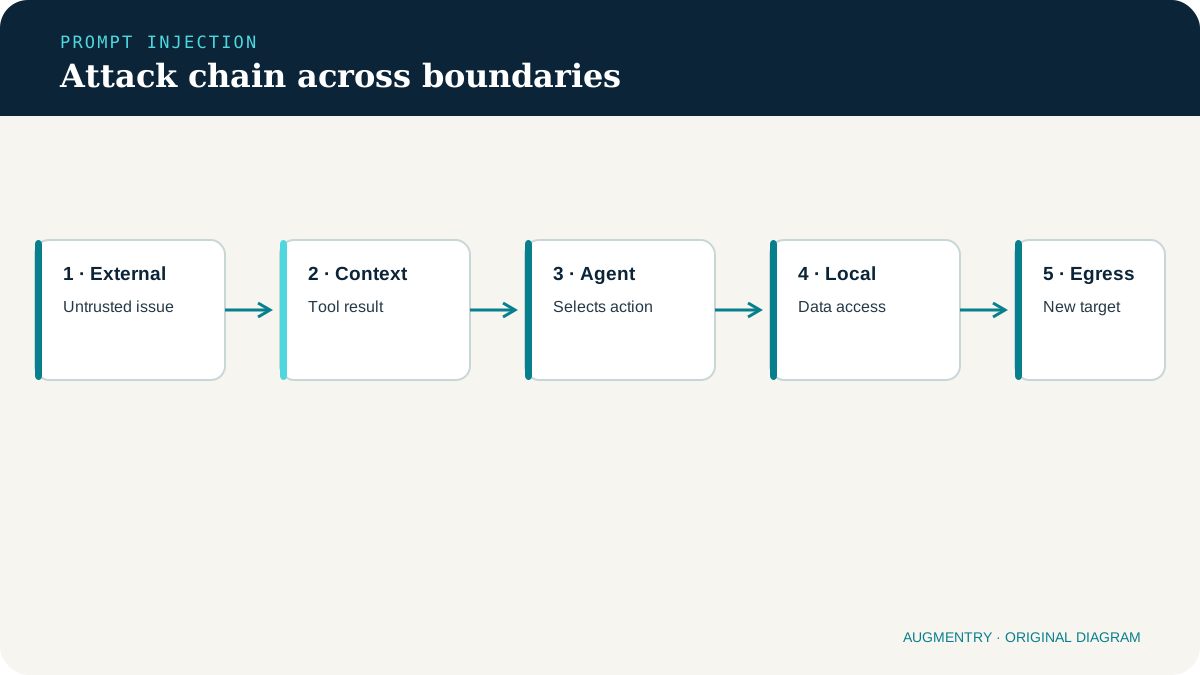
Prompt injection · Data flow
Review access across system boundaries.
-
External content
Untrusted issue or document
-
Working context
Tool result
-
Agent & tools
Selection of a local action
-
Local data
Review the scope of access
-
Network destination
Control destination and data flow
Connections in the diagram
- External content leads to Working context
- Working context leads to Agent & tools
- Agent & tools leads to Local data
- Local data leads to Network destination
- Preserve provenance
- External content remains data. It does not grant permission.
- Limit tools
- Approved actions, resources and parameters.
- Isolate runtime
- Minimal privileges and isolated secrets.
- Control egress
- Known destinations and traceable data flows.
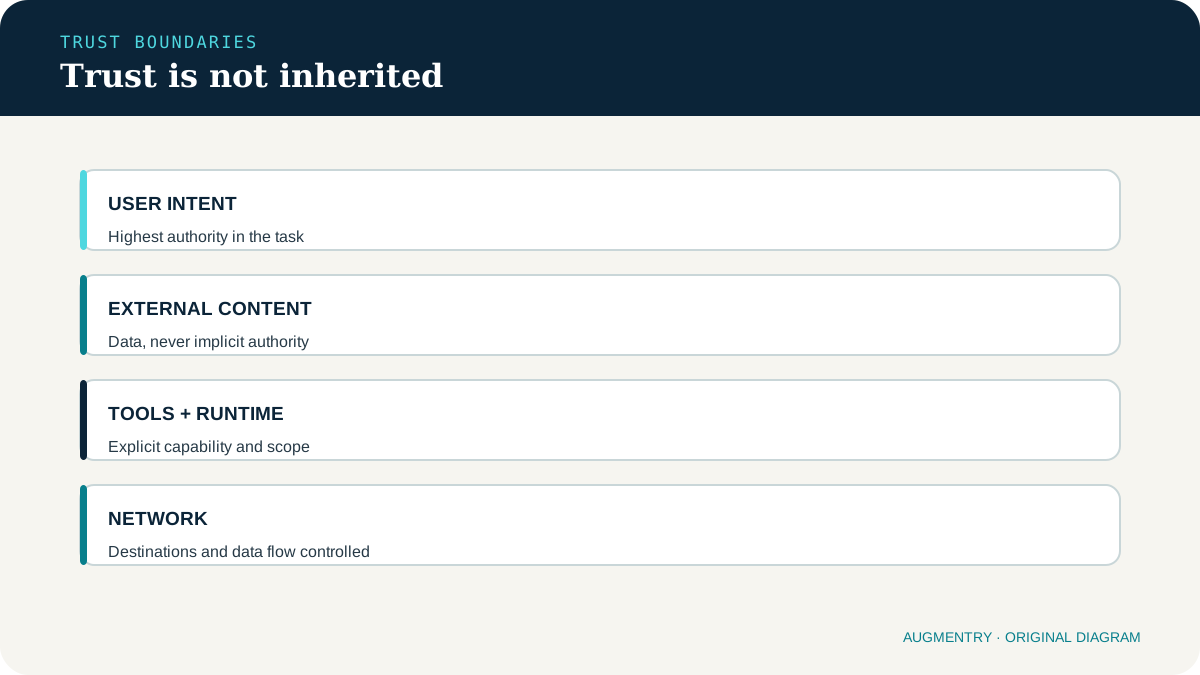
Trust boundaries
Trust is not inherited.
-
User intent
The authorized task determines the scope
-
External content
Data, never implicit authority
-
Tools & runtime
Explicitly limit capabilities and scope
-
Network
Control destinations and data flow
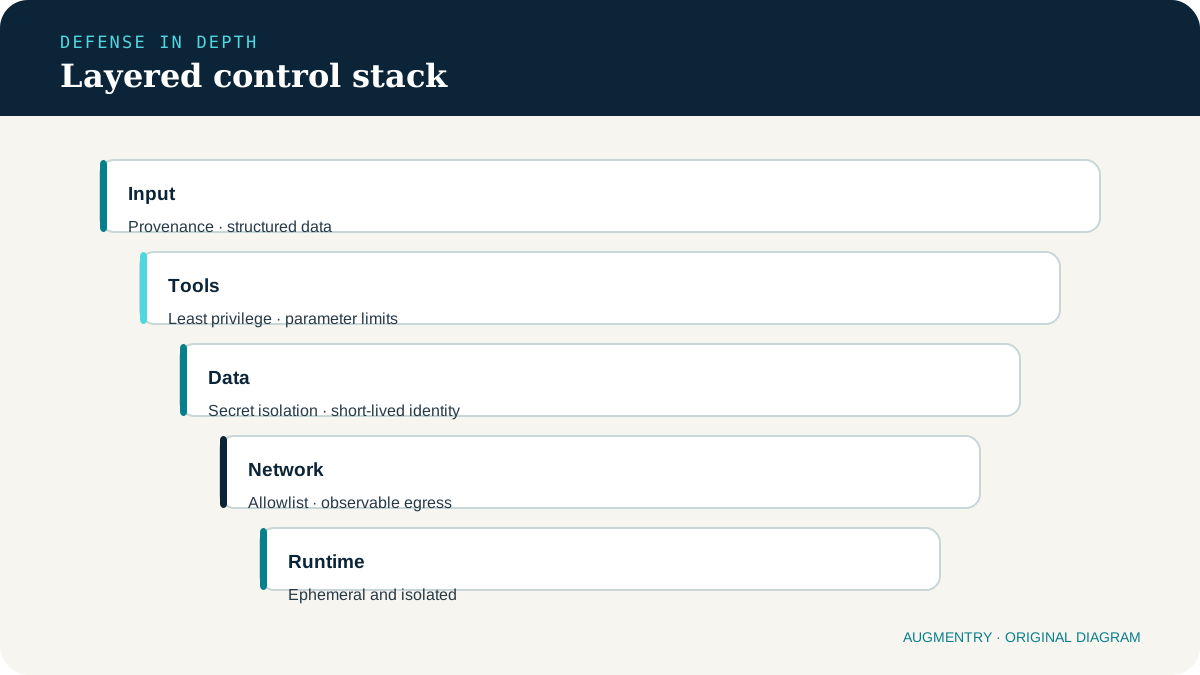
Defense in depth
Controls across multiple layers.
-
Input
Provenance and structured data
-
Tools
Least privilege and parameter limits
-
Data
Secret isolation and short-lived identity
-
Network
Allowed destinations and observable egress
-
Runtime
Ephemeral and isolated environment
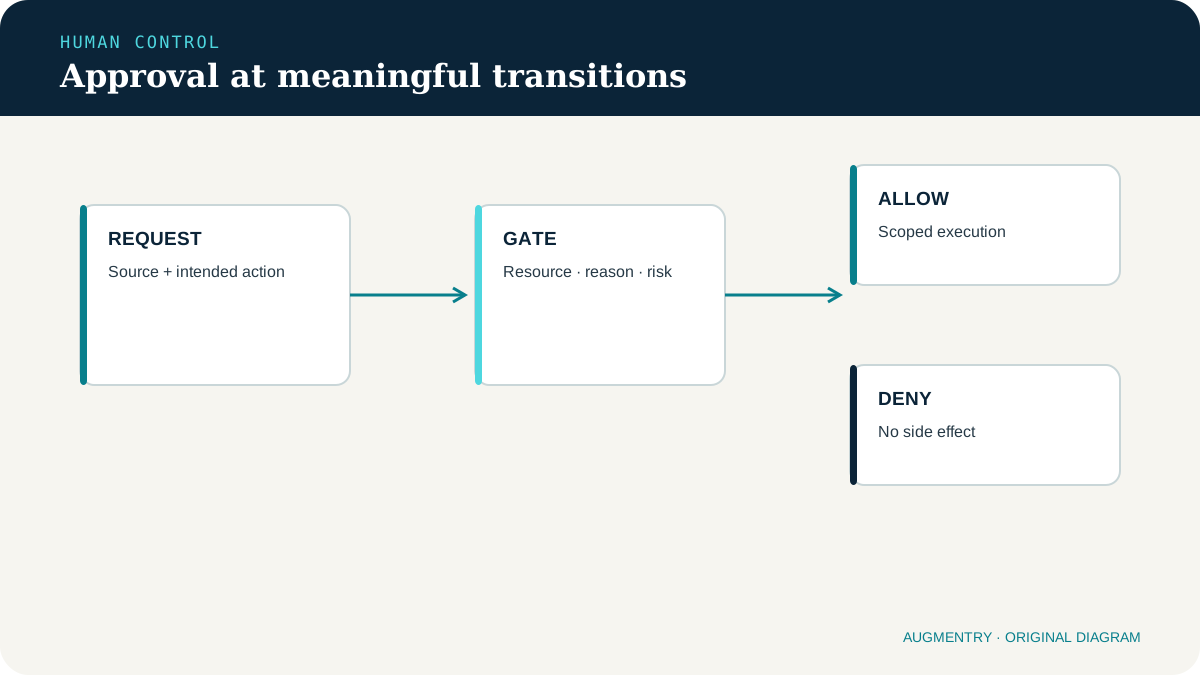
Human control
Approval at meaningful transitions.
-
Request
Source and intended action
-
Decision
Resource, reason and risk
-
Allow
Scoped execution
-
Deny
No execution
Connections in the diagram
- Request leads to Decision
- Decision leads to Allow
- Decision leads to Deny
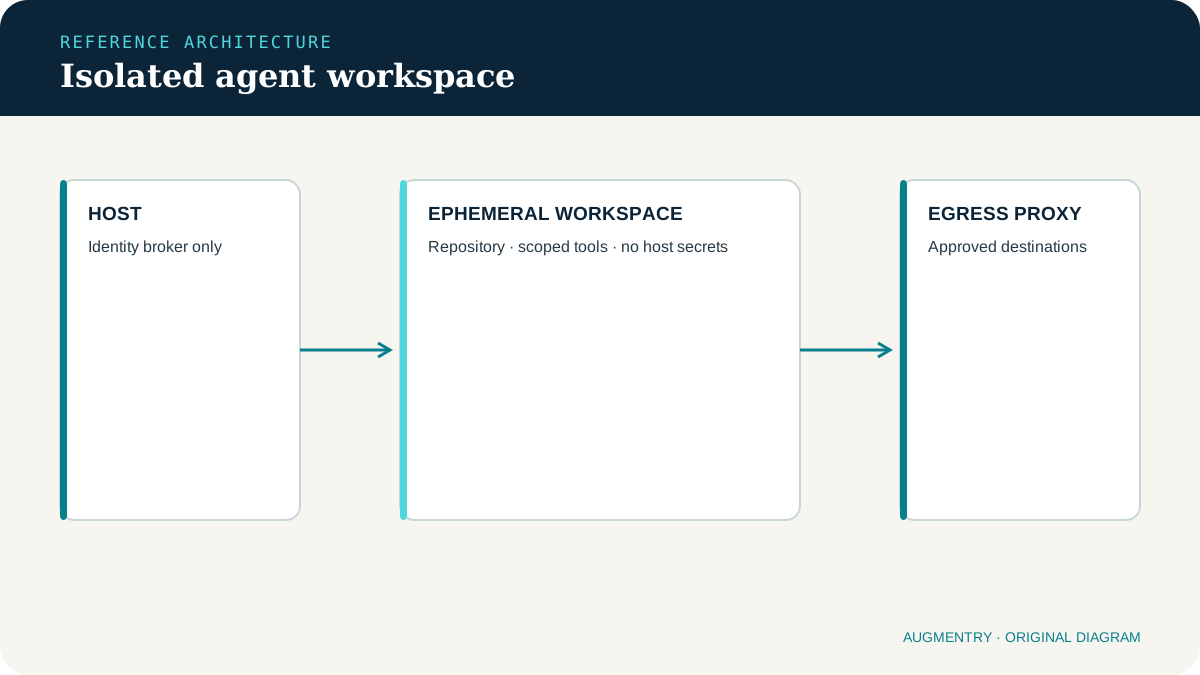
Architecture example
Isolate the agent workspace.
-
Host
Broker identity; keep host secrets outside
-
Ephemeral workspace
Repository and scoped tools
-
Egress proxy
Only approved destinations
Connections in the diagram
- Host leads to Ephemeral workspace
- Ephemeral workspace leads to Egress proxy
Limitations of this analysis
- This analysis reconstructs a published report. It deliberately contains no executable instructions, payload or secret-specific path.
- VS Code and its protections have evolved since the original disclosure. The case is used as an architectural example, not as a claim about an unpatched current state.
- The effect of any control depends on extensions, MCP servers, policies, workspace configuration and identity permissions.
Sources
-
Primary source
Safeguarding VS Code against prompt injectionsGitHub Security Lab
-
Primary source
Security considerations for AI-powered developmentVisual Studio Code Documentation
-
Context
MCP security best practicesModel Context Protocol
-
Context
OWASP Top 10 for Agentic Applications 2026OWASP GenAI Security Project
What would you like to assess or build?
Briefly describe the situation, your objective and the systems involved. We will respond with a technical assessment and a practical next step.