GOV.UK Chat: what technical transparency looks like for a production AI system
An analysis of GOV.UK Chat's public Algorithmic Transparency Record and what it contributes to governance, architecture and accountable operation.
Key finding
The record is valuable because it joins ownership, purpose, components, data flows, evaluation and retention into an inspectable operating picture. It documents governance practice but does not replace it.
Transparency as an operating discipline
Many governance documents state principles without making the actual system visible. The public Algorithmic Transparency Record for GOV.UK Chat goes further. It identifies purpose, accountable organization, suppliers, model and infrastructure components, data sources, evaluation, red teaming, retention and boundaries of intended use.
This makes it useful to technical decision-makers. It demonstrates how governance can move from policy into an inspectable system picture. It does not mean that every published statement has been independently verified. Transparency first creates traceability and accountability. Control effectiveness remains a separate question.
What the public record contains
The record identifies the Government Digital Service as the responsible organization and assigns responsibility at director level. Anthropic is named as a third-party supplier. The technical description includes Amazon Bedrock, Claude Sonnet 4, Titan Embeddings, OpenSearch as a vector store, a Rails application, Kubernetes, relational storage and BigQuery for analysis.
This is not a complete architecture diagram. It still exposes important dependencies: the service uses public GOV.UK material, generates responses through an externally supplied model service, applies retrieval components and includes administrative and analytical functions.
The purpose is bounded as well. GOV.UK Chat helps people find and understand government information. The record states that it does not make decisions about individuals or take actions on their behalf, and users are expected to verify answers. This negative boundary matters because it makes future scope changes visible. Filing applications, prioritizing cases or making binding decisions would change the risk profile.
The structural elements
Named accountability
A generic AI owner is rarely enough. The record connects organizational responsibility to a specific service. In a business, the chain should cover at least a business owner, technical owner, information security, privacy and operational approval. Accountability requires the authority to decide changes, exceptions and shutdowns.
Component and supplier transparency
The model, delivery route and supporting components are recorded. That matters for change management. A model replacement is not an invisible library update when output behaviour, data processing or security assumptions change. A reviewable inventory should record the version, region, interface, data category and contractual role of every material provider.
Data flow and retention
The record names sources, storage components and a twelve-month retention period. Duration alone is not enough. It must connect to purpose, access, deletion and analysis. Which prompts are retained? Is telemetry separated? Can content enter evaluations? Who can export it? A useful record points to technical evidence for these answers.
Evaluation and red teaming
Manual and automated evaluation and red teaming are named explicitly. Generative applications cannot be governed through conventional software tests alone. They need criteria for answer quality, source grounding, harmful content, robustness and unwanted behaviour. The published engineering reports also describe how testing and user feedback informed development.
Visible use boundaries
Telling users to verify answers is not a complete control. It becomes meaningful when combined with product design, source display, feedback mechanisms and a constrained task. Warnings without technical limits merely transfer responsibility. Good governance ensures that the interface supports the intended role of the system.
What the record does not prove
A published record is a self-description. It does not prove that every control remains effective, that every data flow is captured or that evaluations are sufficiently demanding. Naming a red-team exercise says nothing by itself about its scope, findings or residual risk.
The UK record must not be interpreted as evidence of EU AI Act compliance. The Act defines its own roles, risk categories and obligations. Some transparency elements are compatible, but they do not replace a specific legal classification. The transfer discussed here is technical, not legal advice.
Applying the pattern in an organization
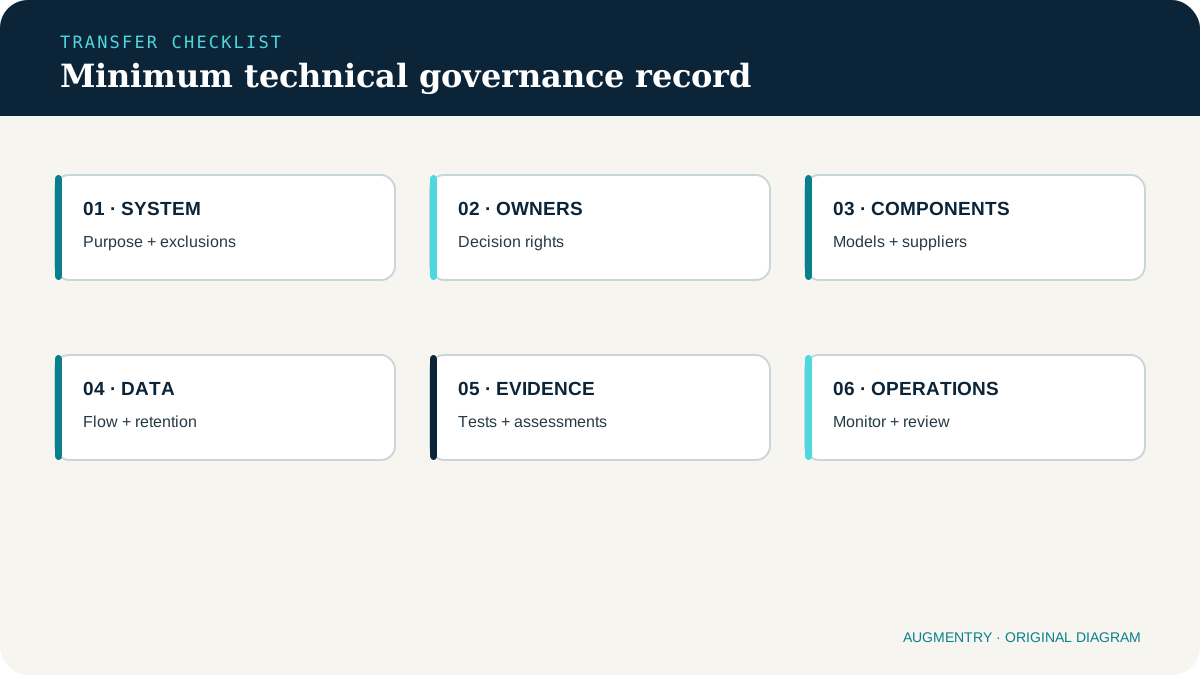
The case supports a compact technical governance record:
- System and purpose: a unique name, user group, permitted tasks and explicitly excluded actions.
- Accountability: business, technical and operational decision-makers with escalation and shutdown authority.
- Components: models, suppliers, retrieval, storage, interfaces and material versions.
- Data: sources, categories, regions, retention, access, deletion and evaluation use.
- Evidence: test catalogue, quality thresholds, security assessments, red-team findings and approval status.
- Operations: monitoring, incident process, change rules, user information and next review date.
This should not end as a static PDF. A versioned artefact close to architecture and operating documentation is more useful. Changes to the model, data source, tool permissions or purpose trigger review. The version relevant to affected people and regulators can be published, while internal evidence remains more detailed.
Conclusion
The GOV.UK Chat record is compelling because it connects governance to concrete technical facts. Its transferable feature is not a specific cloud or model choice. It is the structure of accountability: who owns the purpose, which components and data are used, how the system is evaluated and where its boundaries lie. This does not produce a compliance badge. It provides something more operationally useful: a stable basis for review, change and production decisions.
Original diagrams
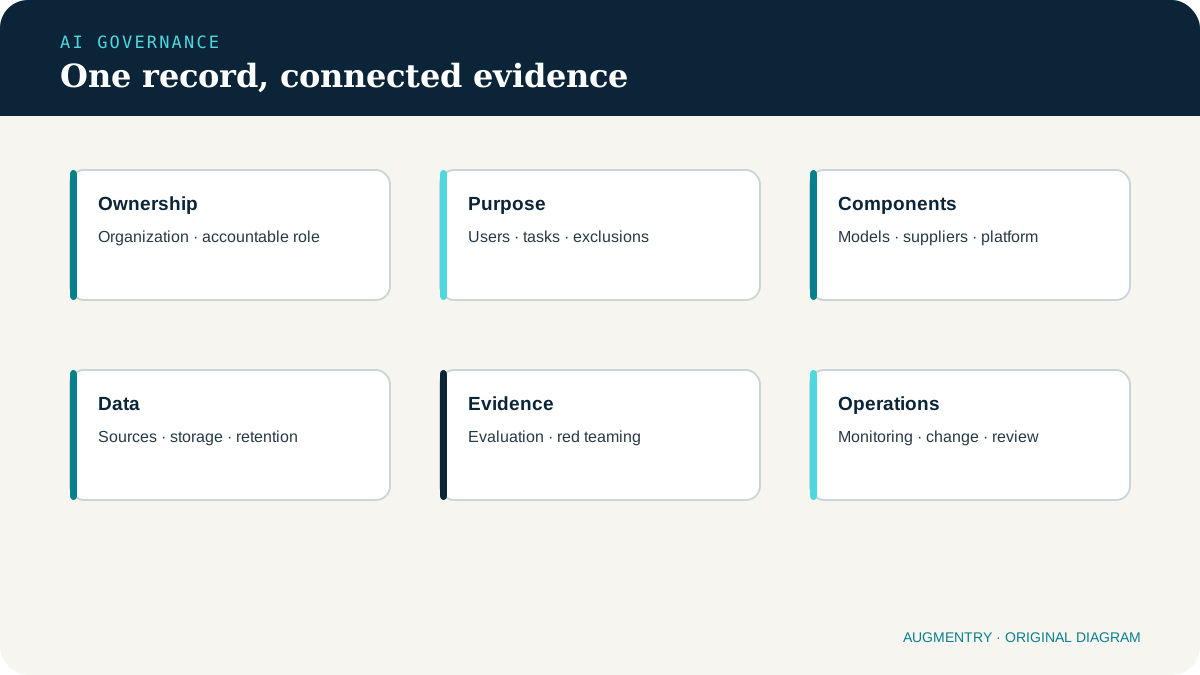
AI governance · Evidence
Connect responsibility with evidence.
Transparency record
-
Ownership
Organization, roles and decision authority
-
Purpose & limits
Tasks, users and excluded uses
-
Components
Models, suppliers and technical dependencies
-
Data
Sources, access, storage and retention
-
Evaluation
Quality review, red teaming and findings
-
Operations
Monitoring, changes and regular review
Documentation creates traceability. The effectiveness of controls must be assessed separately.
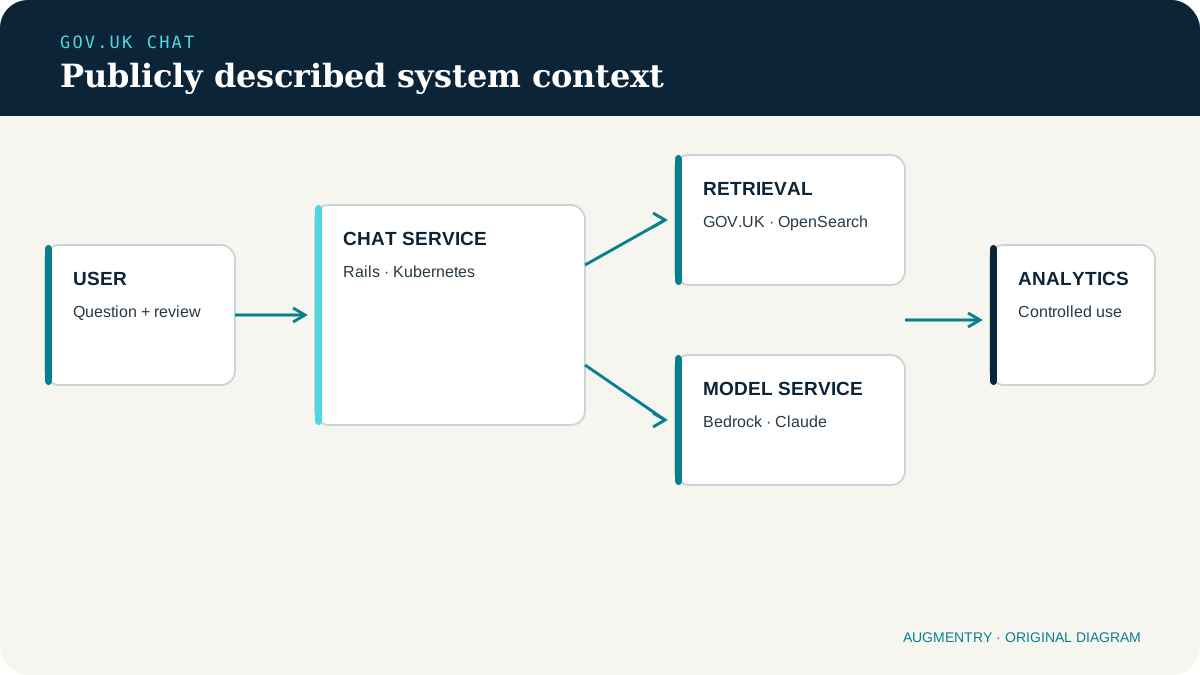
GOV.UK Chat · Components
The publicly described system context.
-
User
Ask a question and review the answer
-
Chat service
Rails and Kubernetes
-
Retrieval
GOV.UK and OpenSearch
-
Model service
Bedrock and Claude
-
Analytics
Controlled use
Connections in the diagram
- User leads to Chat service
- Chat service leads to Retrieval
- Chat service leads to Model service
- Chat service leads to Analytics
An abstraction of published components, not the complete internal architecture.
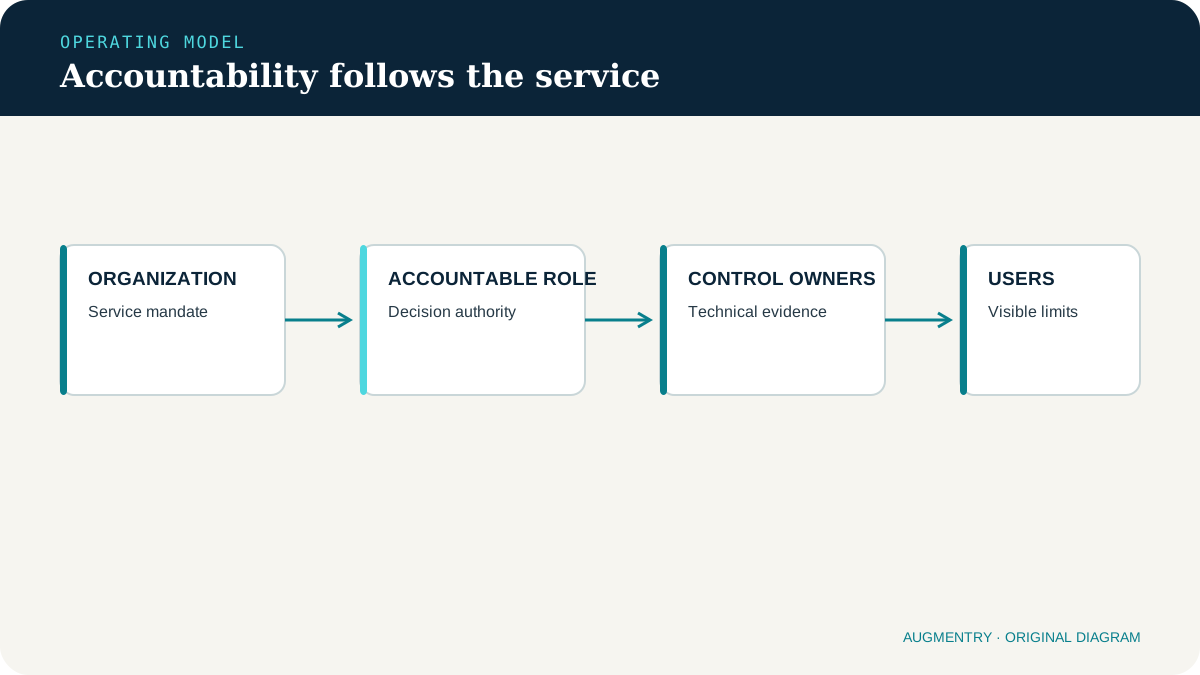
Operating model
Assign accountability to the service.
-
Organization
Service mandate
-
Accountable role
Decision authority
-
Control owners
Technical evidence
-
Users
Visible limits
Connections in the diagram
- Organization leads to Accountable role
- Accountable role leads to Control owners
- Control owners leads to Users
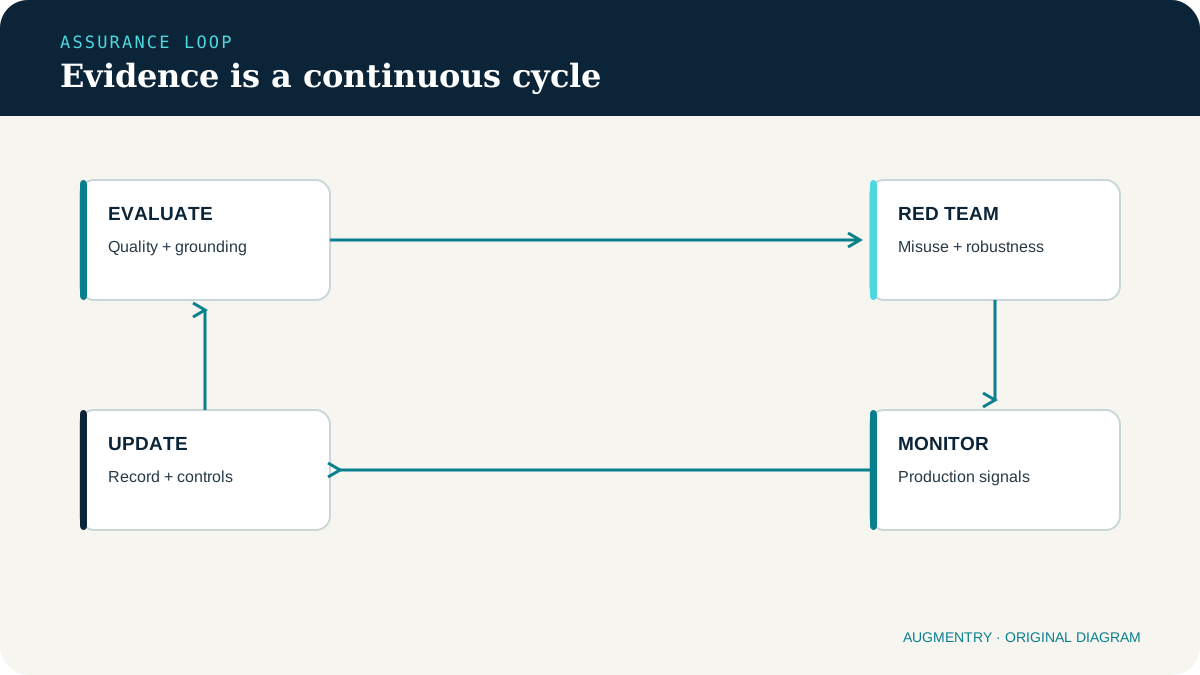
Assurance · Control cycle
Review evidence continuously.
-
Evaluate
Quality and grounding
-
Red team
Misuse and robustness
-
Monitor
Production signals
-
Update
Record and controls
Connections in the diagram
- Evaluate leads to Red team
- Red team leads to Monitor
- Monitor leads to Update
- Update leads to Evaluate
Organizational adoption
A technical governance record.
System documentation
-
System
Purpose and exclusions
-
Owners
Decision rights
-
Components
Models and suppliers
-
Data
Flow and retention
-
Evidence
Tests and assessments
-
Operations
Monitoring and review
Limitations of this analysis
- This analysis uses public information. We could not independently inspect internal controls, contracts, logs or evaluation results.
- GOV.UK Chat is a UK public-sector system. Its legal and organizational requirements do not transfer unchanged to German or European businesses.
- Publication does not establish compliance with the EU AI Act. The European application discussed here is our technical analysis.
Sources
-
Primary source
DSIT GOV.UK Chat Algorithmic Transparency RecordUK Government
-
Primary source
Algorithmic Transparency Recording Standard guidanceUK Government
-
Context
Developing GOV.UK Chat: our data science and AI engineering journeyInside GOV.UK
-
Context
5 things we learned testing GOV.UK ChatInside GOV.UK
-
Context
AI Act regulatory frameworkEuropean Commission
What would you like to assess or build?
Briefly describe the situation, your objective and the systems involved. We will respond with a technical assessment and a practical next step.